

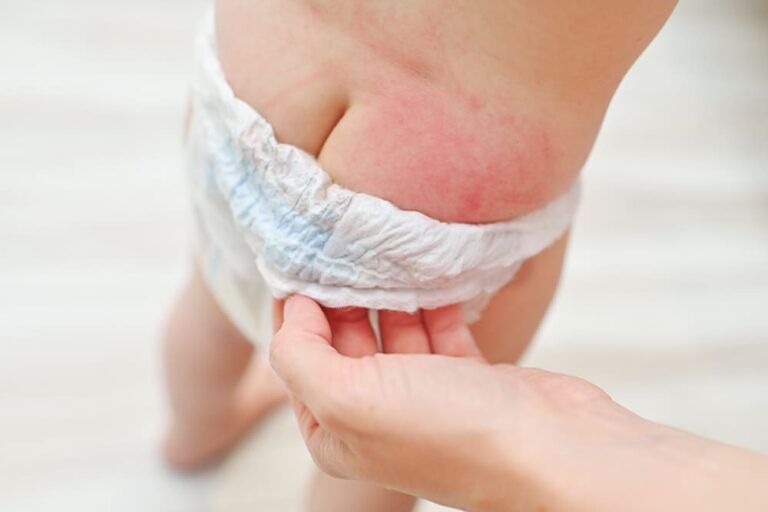
What is diaper rash? Diaper rash is a common skin concern for baby parents to battle with. Often causing redness, irritation and small bumps or inflamed areas, diaper rash can be the result of a combination of factors. How does it affect my baby? Diaper rash is usually mild, so parents shouldn’t be too concerned when it happens; however, if your little one is suffering from diaper rash, it may be making diaper changes uncomfortable for them.
What causes diaper rash? The most common cause of diaper rash in babies is prolonged exposure to moisture and friction from diapers and contact with urine and stool. Other potential contributing factors for diaper rash include sensitive skin and/or infrequent diaper changes, unsuitable skincare products and certain infections. How do I keep my baby’s skin protected?
Keeping up with good diaper hygiene to ensure your baby’s skin is as dry as possible and using gentle diaper rash creams for sensitive skin will go a long way to keeping your little one’s skin in tip-top condition.
What Is Diaper Rash and Why Does It Occur?
Diaper rash is a skin irritation that occurs in the diapered area of the body. Diaper rashes usually occur in the buttocks, thighs, groin, and genital area. The skin of a baby is sensitive and can become irritated when exposed to wetness, friction, and other irritants over a prolonged period of time.
The diapered area is a place where airflow is limited, so the area is often warm and moist. This warmth and moisture can cause the skin’s ability to protect itself against irritation to be diminished.
Usually, minor diaper rashes can be treated and controlled with proper diaper care. Diaper rash that is persistent or recurrent may need additional treatment.
What Causes Diaper Rash in Babies?
Diaper rash can be caused by many different things. Identifying the cause of the diaper rash may help prevent it.
1. Prolonged Exposure to Moisture
The most common cause of diaper rash is a baby wearing a wet diaper for too long. Once a baby gets wet, the skin will become softer and more prone to irritation from friction.
Regular diaper changes are important, especially after the bowel movement & at that time when the diaper gets wet.
2. Contact with Urine and Stool
Infants’ skin becomes irritated when it is exposed to urine and stool for extended periods. The moisture of the urine can cause inflammation, while digestive enzymes from the stool can be irritating to sensitive skin.
Gently cleaning an infant’s diaper area after every bowel movement is part of good baby hygiene.
3. Friction from Diapers
Wearing diapers too tight can cause friction between the baby’s skin and diaper. This can lead to redness and irritation. Diapers can be too tight in the waist, thigh, and groin areas.
Parents should ensure that the diapers fit their baby properly and are the right size.
4. Sensitive Skin and Skincare Products
Some babies are just born with more sensitive skin than others. Their skin can become irritated by scents, harsh cleansers, preservatives, and other skincare ingredients.
Using skin care products that are not designed for use on babies may make existing irritation worse. The use of gentle skin care products designed for babies may minimize your baby’s skin exposure to unwanted ingredients.
How Can Parents Prevent Diaper Rash?
A few simple steps can help prevent diaper rash, including keeping the baby clean and dry, and helping to protect the skin’s natural barrier.
Change Diapers Frequently
Wet the diaper before putting the baby in the wet diaper so it’s easy to tell if the baby is wet. Dirty diapers should also not be kept on for too long. Check in on the baby often and change the diaper after every bowel movement.
Clean the Diaper Area Gently
When cleaning the baby’s bottom, use lukewarm water and a soft cloth or a fragrance-free baby wipe. Do not rub their bottom too hard, as the skin is quite sensitive.
Allow the Skin to Dry
Pat the skin dry after cleaning it rather than rubbing it. Leaving the diaper area out in the air for a few minutes (where safe and practical) can help dry out any remaining moisture.
Choose the Appropriate Brand
Like other things as well as factors, this needs to be checked: Does this brand offer good rash cream or not instead of making any random choice? So, just go & get the one triple action diaper rash cream from Boroplus FromMaa for your little one to get relaxed.
Choosing the Right Diaper Rash Cream for Sensitive Skin
Not all diaper rash creams contain the same formulation. Parents should also consider how sensitive their baby is to different products and what the product will be used for. Ingredients in diaper rash creams may vary.
Here are some things to consider when selecting a diaper rash cream:
- Look for products specifically formulated for babies.
- Check the ingredient list to see if any of the ingredients would irritate.
- Check if the product is safe to use on newborn babies if you’re buying one.
- Prefer gentle formulations designed for delicate skin.
- If your baby has persistent or recurring diaper rash, see your pediatrician.
- Follow the label instructions for dosage and frequency.
To take care of a baby’s sensitive skin, you should make sure that the skin is properly cleansed and kept dry and protected. The cream that you use to care for your baby’s sensitive skin is a part of the skin cleansing routine.
When Should Parents Consult a Doctor for Diaper Rash?
While most diaper rashes resolve on their own with proper hygiene and skin protection, some symptoms can require medical intervention.
Parents should consult a pediatrician if:
- The rash becomes intense or starts spreading outside the diaper area.
- Blisters or open sores form on the skin. Blisters contain pus or blood.
- Baby has a fever or seems to be more uncomfortable than usual.
- The rash develops in skin folds. The area around the rash has little spots of redness.
- The diaper rash isn’t getting better after a few days, even with good home care.
- The rash comes back after regular diaper changes and good diaper skin care.
You should not use medicated creams, antifungals or steroids unless recommended by a doctor.
Questions Parents Often Have About Diaper Rash in Infants
1. What causes diaper rash most of the time?
The most frequent cause for diaper rash is skin remaining damp for a long time after coming into contact with urine and stool. The skin may also become irritated due to the constant touching with the diaper and if the skin itself is quite delicate.
2. Is it possible to use a diaper rash cream to prevent a diaper rash?
Frequent diaper changing and using a good-quality diaper ointment that will protect the skin from being wet are two main steps to prevent a diaper rash. It is also essential to give the skin a nice and thorough wash after each change and to dry it gently.
3. Can newborns safely use diaper rash creams?
Diaper creams are available in different formulas, and some of them will be especially for the use of babies. However, this means parents will have to be careful to read the product instructions and talk to a pediatrician if they are confused whether to use a product on their baby’s skin or not.
4. How often should parents use a diaper rash cream?
The use of such creams should also be according to product guidelines and recommendations given by the manufacturers. If parents still experience their child’s skin being irritated, it is highly advisable for them to consult their doctor.
5. What measures should parents take to prevent a diaper rash?
Avoid using rough scrubbing agents or fragrances, and if it comes to diapers, don’t use very tight ones. Furthermore, always consult and wait for the approval of one’s healthcare provider on what kind of medicated creams would be good choices.
Final Thoughts
Although most times, baby diaper rash is one of the skin problems that occur more often, a few hygienic measures done consistently can reduce chances for skin irritation. Keeping a close watch when changing a baby’s diaper, a gentle clean-up, properly drying the skin areas, and wearing comfortable diapers are the things that a parent has to do to make the baby’s diaper area cleaner as well as healthier.
Parents will find it useful to get to know the right type of diaper barrier cream, as these creams may help form an external protective layer against the effects of moisture and dirt. For example, parents may think of the use of the BoroPlus FromMaa triple action baby diaper rash cream as a part of their dedicated diaper-care routine when they make sure about the product formulation and stick only to the use recommendations.
Finally, learning a lot about the needs of a child’s skin by reading baby skincare books, for example, and taking action as quickly as possible when seeing early signs of skin irritation, is a recipe for making diaper-changing time enjoyable while at the same time safeguarding a baby’s delicate skin.
