

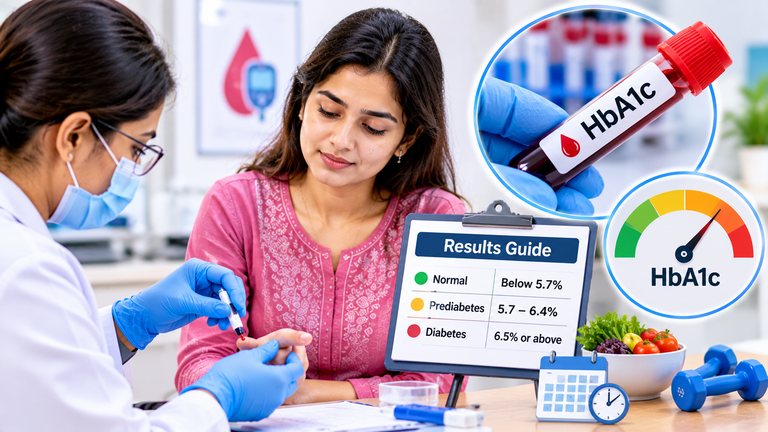
Think of an HbA1c test as your blood sugar’s 90-day storybook. While a daily finger-prick test provides you a snapshot of your glucose level at a specific time point, whereas your HbA1c level offers broader picture, reflecting how your average blood sugar has behaved over the past two to three months.
Whether you’re managing diabetes, checking out possible symptoms, or simply proactively taking care of your long-term health, understanding your HbA1c provides you a valuable insight. It’s one of the most reliable ways to track your long term glucose status, identify trends early, and make informed decisions with your doctor.
What an HbA1c Test Measures
HbA1c stands for glycated haemoglobin, a measure of how much glucose has attached to the haemoglobin in your red blood cells. The higher your blood sugar levels over time, the more glycated haemoglobin is formed. Since red blood cells live for approximately 120 days, the HbA1c test reflects average blood sugar over the past two to three months rather than providing a single reading.
Unlike a fasting or after-meal glucose test, HbA1c reflects glucose levels over a longer period. Doctors use it to assess diabetes risk and monitor glucose management, although it cannot show day to day glucose fluctuation.
When to Get Tested
HbA1c testing is not necessarily needed every year for everyone. Doctors typically recommend it in several specific situations where the information can help in managing diabetes and guiding ongoing treatment. The following are the most common reasons to get tested.
- Symptoms of diabetes such as frequent urination, excessive thirst, unexplained weight loss or persistent fatigue.
- Family history of type 2 diabetes in parents or siblings.
- Overweight adults, especially those with high blood pressure or high cholesterol.
- Women with a history of gestational diabetes or polycystic ovary syndrome (PCOS).
- Screening based on age and risk factors, as recommended by a doctor.
- Regular monitoring of known diabetes, usually every three to six months.
- Before starting or adjusting diabetes medications.
For individuals with diabetes, usually HbA1c testing is commonly performed every three to six months to evaluate how effectively treatment plans are controlling blood sugar levels. People being evaluated for possible diabetes may require confirmatory testing before a definitive diagnosis is made.
What the Results Mean
Reference intervals and reporting formats can vary by laboratory. Read your result against the range on your own report.
| Parameter | Reference range |
| HbA1c | Less than 5.7% |
A value within this range indicates normal blood sugar control. HbA1c values between 5.7% and 6.4% are often classified as prediabetes, while 6.5% or higher usually supports a diagnosis of diabetes. For individuals already on treatment, the target is determined by the treating doctor based on age, overall health and other prevailing clinical conditions. Interpretation should always be done by a qualified medical professional.
What High HbA1c Values Indicate
A raised HbA1c suggests that average blood sugar has been elevated over the preceding two to three months. The result should be interpreted in context with symptoms, medical history, and other laboratory investigations before making any diagnostic or treatment decisions. The following are the most common reasons for a high result.
- Uncontrolled or newly diagnosed diabetes mellitus (Type 1, Type 2, or other forms of diabetes).
- Missed medication doses or poor adherence to dietary recommendations.
- Reduced response to current diabetes treatment.
- Stress, acute illness or infection raising blood sugar temporarily.
- Certain medications particularly long-term corticosteroid (steroids) therapy.
A persistently elevated HbA1c is associated with a higher risk of complications affecting the eyes, kidneys, nerves and heart. Doctors individualized targets based on certain factors such as age, overall health, duration of diabetes and other medical circumstances.
Limitations of the Test
- Changes in red blood cell lifespan may affect the accuracy of the HbA1c results.
- Anaemia may give false results depending on the underlying cause.
- Recent blood transfusions can affect HbA1c readings.
- Pregnancy can influence HbA1c levels.
- Certain haemoglobin variants (e.g., haemoglobinopathies), may interfere with the test accuracy.
- Doctors may recommend alternative blood glucose tests or monitoring methods when needed.
Choosing a Reliable Laboratory for HbA1c Test
Accurate diabetes care depends on consistent and reliable HbA1c results. Standardised assays, calibrated analysers and careful sample handling all affect the value reported. Laboratories like Lupin Diagnostics offer HbA1c testing and comprehensive diabetes panels across India through its National Accreditation Board for Testing and Calibration Laboratories (NABL) accredited labs, with free home sample collection available in major cities.
The Bottom Line
An HbA1c result helps doctors understand longer-term blood glucose patterns, but it is only one part of comprehensive diabetes assessment. If a clinician recommends testing, get yourself tested and understand your current medical condition. For an HbA1c test or a complete diabetes workup, you can visit your nearest Lupin Diagnostics Centre to experience convenient and reliable testing. Regular testing supports timely treatment adjustments and reduces the long-term risk of complications. Also, discuss your report with your doctor before drawing conclusions.
