

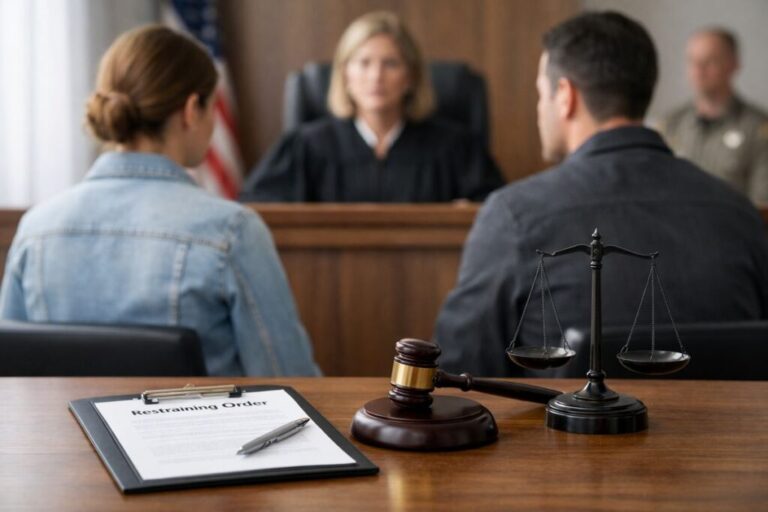
Getting served with a temporary restraining order in California can turn your life upside down in one afternoon. You may be told to leave your home, stay away from your children, or give up your firearms. The court hearing that follows, usually within about three weeks, decides whether those orders end or become a long-term order lasting up to five years.
Many people expect to simply tell their story at that hearing. In reality, it is a short proceeding with rules about proof, witnesses, and documents. Speaking with a California restraining order hearing lawyer before your court date can help you understand what the judge will look for. This guide covers the basics for both sides.
The Hearing Decides Whether the Temporary Order Becomes Long Term
At the hearing, the judge reviews evidence from both sides and decides whether to grant a longer order, deny it, or change its terms. The person who asked for the order, called the petitioner, goes first because they carry the burden of proof. The respondent then answers, and each side may question the other’s witnesses.
Most hearings move quickly. Uncontested matters can end in minutes, and contested ones often finish in under two hours. The judge usually rules on the spot, and the new order takes effect right away.
The Standard of Proof Depends on the Type of Order
California’s restraining orders do not all use the same standard of proof. Domestic violence and elder abuse orders use a preponderance of the evidence, meaning the claims are more likely true than not. Civil harassment, workplace violence, and gun violence orders require clear and convincing evidence, which means the claims must be highly probable.
This difference shapes how each side should prepare. Under the lower standard, believable testimony alone may be enough. Under the higher one, judges often want messages, photos, records, or witnesses that back up the petitioner’s account.
Evidence That Carries Weight With a Judge
Text messages, emails, and social media posts decide many of these cases. Print full conversations with dates showing, since a cropped screenshot can raise more questions than it answers. Be ready to explain who sent each message, when, and how you got it.
Records showing where someone was at a certain time can be very persuasive. Timecards, badge records, receipts, and travel confirmations often carry more weight than a simple denial. Witnesses should come in person, because a letter from someone who is absent is usually treated as hearsay.
Audio recordings need extra care. California generally requires everyone’s consent before a private conversation is recorded, so a secret recording can backfire on the person who made it. Get legal advice before bringing one to court.
Using the Weeks Before the Hearing Wisely
The time before the hearing goes by fast. Start by listing every date, place, and claim in the petition that a record could confirm or disprove. Save phone data, location history, and security footage right away, since some cameras erase video after about thirty days.
Request records from employers, phone carriers, or property managers early, because replies can take weeks. Respondents can file a written response, such as form DV-120 for domestic violence or CH-120 for civil harassment. Bring three copies of each exhibit: one for the judge, one for the other side, and one for yourself.
The California Courts self-help site offers a free guide to getting ready for your restraining order court hearing. It explains what to prepare before your court date and what to expect once you are in the courtroom.
Mistakes That Can Hurt Your Case
Some common problems are easy to avoid. Contacting the protected person during the temporary order, even with a friendly text, can lead to criminal charges. It also often becomes the other side’s best evidence, and arguing in court or dwelling on background stories tends to hurt as well.
Missing the hearing is one of the costliest errors. If the respondent does not appear, the judge can grant the order anyway, with the same force as one issued after a full hearing. Respondents facing a related criminal case should also be careful, since sworn testimony could later be used by a prosecutor.
Possible Outcomes Beyond Granted or Denied
A hearing does not always end with a simple yes or no. Judges can narrow the terms, shorten the length, or allow exceptions for a shared workplace or child exchanges. Domestic violence orders can last up to five years, but shorter orders are common when the facts support them.
The parties may also agree to a stipulated order, sometimes without a finding that the alleged conduct happened. That can matter for someone worried about a professional license or immigration status. Either side can ask to postpone for a good reason, and the temporary order usually stays in place until the new date.
Frequently Asked Questions
Do I need a lawyer for a restraining order hearing in California?
No, and many people represent themselves. Court self-help centers help with forms but cannot speak for you in court. A lawyer is worth considering when the facts are disputed, the other side has one, or the order could affect your home, custody, job, or firearm rights.
What happens if the petitioner does not show up?
The judge usually denies the request and ends the temporary order that day. The judge may postpone instead if there is a good reason, and the petitioner can still file again later.
Can I appeal if the judge grants the order?
Yes, but the deadline is short. The appeals court reviews only the hearing record, not new evidence, so getting key evidence admitted the first time matters.
Preparation Shapes the Result of Your Hearing
A restraining order hearing is short, but its effects can last for years. For either side, the result usually depends on organized evidence, clear testimony, and knowing which legal standard applies. Starting early, keeping good records, and obeying every term of the temporary order give you the best chance at a fair outcome.
