

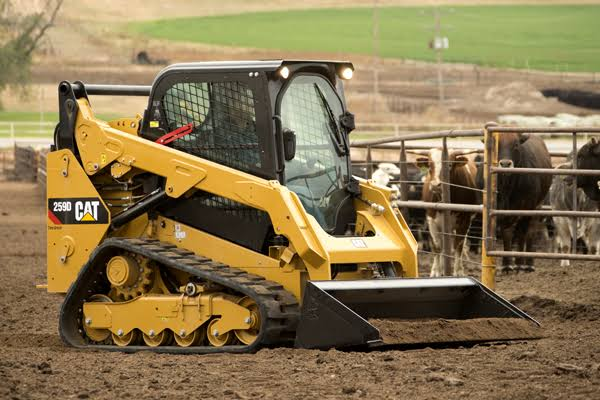
Few pieces of equipment have earned their place on as wide a range of sites as the skid steer loader. It’s compact enough to work in spaces that larger plants can’t access, powerful enough to handle demanding material moving, and versatile enough to cover functions that would otherwise require multiple specialist machines. This has made the skid steer loader one of the most useful pieces of kit across all kinds of projects.
How the skid steer loader works and why it matters:
The defining mechanical characteristic of a skid steer loader is its steering system. Unlike conventional wheeled machines that steer by turning their front wheels, a skid steer steers by varying the speed and direction of each wheel independently.
That’s what makes it so valuable in confined spaces. It can spin in place, work right up to a wall or structure, and reposition without any hassle. On a demolition site working inside an existing structure, or a landscaping job in a residential property with limited access, that portability makes all the difference.
Tracked skid steer variants can also distribute ground pressure more evenly and cause less surface disruption, making them the better choice for sites that are sensitive to skidding wheels.
Matching the frame size to the application.
Skid steer loaders are available in many frame sizes, which are usually matched to their rated operating capacities.
Small-frame machines with an operating capacity of 500 to 800 kilograms are suited to light material handling and are best for working in confined spaces. Medium-frame machines cover the majority of general construction and site work you see around the city. And larger-frame machines with operating capacities above 1,200 kilograms handle heavy-duty work, such as on large demolition sites.
But buying based on operating capacity alone, without considering the machine’s physical dimensions, is a big mistake. What good is a large frame skid steer with the right operating capacity for a job if it can’t even fit through the site entrance?
So, frame width, height, and the machine’s weight must be checked against the site’s physical constraints before anything else. For buyers currently evaluating skid loaders for sale, working through those physical constraints first narrows the market considerably before the capacity or spec comparison begins.
The attachment system is where the value multiplies.
The skid steer loader’s universal quick-attach system elevates it from a capable compact loader to a genuinely multifunctional site machine. Buckets, pallet forks, augers, hydraulic breakers, trenchers, grading blades, snow blowers: anything and everything!
The hydraulic flow rating of the machine determines which attachments it can run effectively. Standard flow systems handle the most common attachments. High-flow systems are required for attachments with higher hydraulic demand, such as cold planers, large augers, and high-output sweepers. And before buying a skid steer loader, you need to check the hydraulic flow rating against the attachments you intend to run with it.
A groundworks and landscaping contractor in Dubai running a commercial project portfolio added a skid steer loader to their fleet after consistently hiring one in for specific tasks. In the first year of ownership, they tracked which attachments the machine used across their jobs.
The bucket and pallet forks accounted for the majority of operating hours, but the auger and grading blade attachments between them made several jobs efficient that would otherwise have required additional equipment. This allowed the contractor to take on job types they’d previously declined!
Working alongside other access and finishing equipment.
On sites where a skid steer loader is handling ground-level material moving and preparation work, the above-ground activity often runs in parallel rather than in sequence.
A scissor lift positioning workers at height for structural fixing or overhead service runs is a common companion to a skid steer on construction and fit-out sites. And the site management consideration is ensuring that the operating areas of the two machines don’t create conflict.
Evaluating scissor lift price alongside skid steer specification as part of the same procurement decision produces better site planning outcomes. The operational relationship between the two machines is considered before they even arrive on site!
Surface finishing and what comes after the groundwork.
The loader’s role on a construction site often ends when the structural phases are complete, but the finishing phases that follow depend on the work the skid steer has done. Specifically for concrete flooring projects, the quality of the sub-floor preparation done with the skid steer directly affects the performance of the finishing equipment that follows.
Power trowels finish concrete floor slabs most effectively on a surface that’s been properly prepared and poured to a consistent depth. Variations in sub-floor level that weren’t corrected during the preparation phase show up as inconsistencies in the finished floor surface that power trowels can only partially compensate for.
For contractors running both phases of a flooring project, specifying a power trowel for sale alongside the skid steer in your equipment plan will improve coordination between the two phases and give you a much better finished floor quality.
