

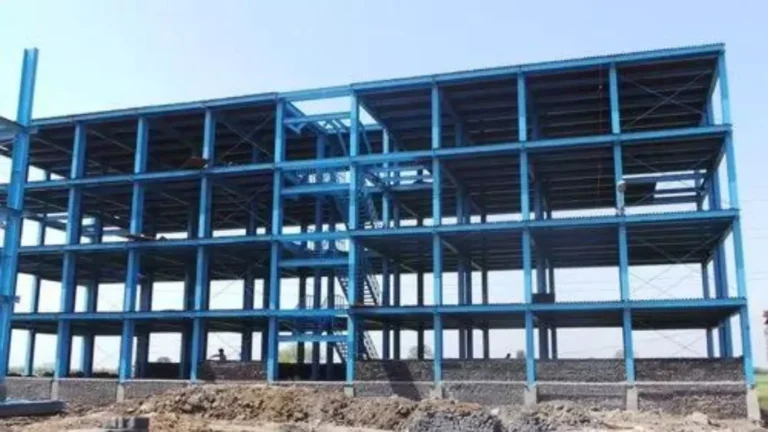
Approximately one in three fatal injuries suffered by construction workers is the result of a fall. And when you’re working on a multi-story building, it doesn’t take long for statistics to hit home. The jobsites that are hitting their schedule and avoiding the more serious incidents aren’t the ones where safety is seen as a box-ticking exercise. It’s seen as a fundamental process decision.
The hierarchy of control actually saves time
Many safety frameworks are based on the hierarchy of control: eliminate the hazard, substitute it with something safer, isolate people from the hazard, reduce the risk through administrative controls, or give people PPE. When it comes to personal protection, they give you every chance to find a different control method before defaulting to the last one available.
On a multi-story building, it means that the design has to eliminate the risk wherever possible before turning to the harness. Edge protection is not a ‘nice to have’. It’s the first line of defense. It does its job without any active decision on the part of the worker. Edge protection works regardless of whether they are feeling tired or rushed, whether visitors are around or whether someone forgot to bring the harness.
Pre-start inspections and the competent person rule
Before work commences each day, examine each piece of vertical access equipment on a multi-story site. Look for missing locking pins, metal fatigue, bent uprights, and any movement in base plates. It only takes about fifteen minutes and can help you avoid risks that would force you to stop work altogether.
Identify a scaffolding coordinator – a person trained and competent to authorize the use of any temporary platform. If that role is everyone’s responsibility, this step won’t be taken. If one specific person takes responsibility and gives the go-ahead every morning, you can be sure all checks are being done. The scaffolding coordinator doesn’t need to be a new hire. On most construction sites, it’s just the most experienced (or bossiest) tradesperson in a yellow hard-hat.
Your Safe Work Method Statement for high-risk construction work needs to outline who the scaffolding coordinator is, what they are checking, and what the maximum load class for each platform is. It’s the fastest way to bring a new worker up to scratch regarding exactly how well you’re doing on site.
Tool tethering and exclusion zones aren’t optional above level one
A hammer falling from a third-story scaffold isn’t just a noise nuisance. The human head is a lot more fragile than many people seem to realize. Lots of workers across the U.S. die every year because they were struck by a dropped tool.
Tool tethering removes that risk. No tools get dropped on level zero because nothing gets dropped from above level zero. Are they cumbersome sometimes? Annoying? Sure. They can also save a life that’s worth more than your annoyance.
Exclusion zones work on the same principle. Wind loading on a rooftop perimeter could cause a wooden plank to skid across the roof’s surface creating a knife-edged hazard right where someone could have inadvertently been walking due to a lax perimeter protection policy.
It’s off the books, but consider exclusion zones one less thing you can be blamed for. If you blew it on the tethers, at minimum you still kept those not wearing the tethers from being struck or skewered. You can’t stop everything, but you can stop what people can blame you for.
Equipment selection is a safety decision
The type of scaffolding system used on a build impacts more than just the budget. Aluminum systems weigh a fraction of what steel does. That has a real impact on how the project actually runs over many stories. When your component weighs less, you’re not pushing workers beyond their limits, loading and unloading platforms at the start and end of every shift. Manual handling injuries are the “chronic” statistics, not the big one-off falls, but they add up across a build into many lost days.
Weather is outside your control. So is how long it takes to build something. Steel corrodes, and the one component you don’t think to check for integrity is the one that you’re stood on 30 floors up, because it was right next to the one you had to check just to lift it into position.
So when a firm decides to make an aluminum scaffolding buy rather than a short-term rental they’re making a mobility and ease decision that will run across many locations for many years. What you own gets maintained to your standard, exactly as you specify. What you own gets erected by a team you trust, that has experience with the components. You know exactly what it’s rated to carry.
PPE is the last line, not the first
Protective gear such as hard hats, high-visibility vests, and non-slip boots are essential for multi-story construction sites. However, these are superficial protective measures. If most of the risk management strategies are based on personal protective equipment (PPE), it means that real, effective precautions have been missed or overlooked.
First, make sure that the appropriate protective fences are in place. Second, get used to daily inspections. Personal responsibility must be clear. Use equipment that does not cause physical harm or create insecurity. If you do all that, PPE should be the last resource available. Safe sites don’t slow down. They just stop losing days to things that were preventable.
