

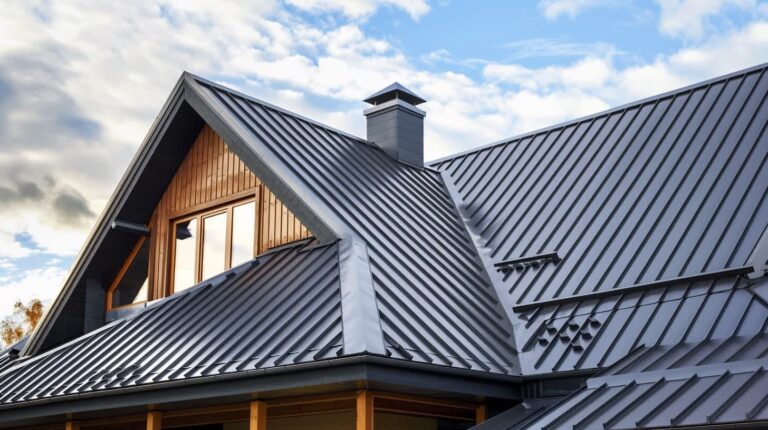
Metal roofing is becoming a hot trend amongst homeowners, and for great reason. But if you’re part of the trend and have started researching metal roofing for your property, you’ve likely been greeted by some scary numbers when it comes to what you’re going to have to pay. But understanding what you’re paying for goes a long way in making this cost justify itself – for some homeowners, at least.
What Costs Compromise a Metal Roof?
Let’s start with the most obvious. On average, metal roofing costs anywhere from two to three times more than asphalt shingles when considering installation. When considering an average-sized home, this is a lot to come up with off the bat on top of what you might already owe for the mortgage!
But relative to metal type, steel creates the lowest overhead costs, while aluminum is priced higher but encourages better performance by virtue of not rusting in coastal climates. Copper and zinc are even more expensive but boast the longest lifespans and are favored for their patina qualities.
Additionally, standing seam (raised vertical seams) metal roofing is priced higher than metal shingles or panels. However, standing seams create a watertight seal that better accommodates expansion and contraction due to temperature fluctuations.
Labor Makes Up a Huge Portion of This Cost
Approximately 50% of your total cost regarding a metal roof installation is based on labor – and it’s not because contractors want to pocket the money all for themselves. Installing Toronto Metal Roofing tends to require a specialized skill set that few roofing contractors possess.
For example, metal panels must be cut and shaped in various ways during installation, leaving little room for error – which, of course, could reduce your roof’s effectiveness and necessitate a complete redo. Accomplished teams can generally finish most residential jobs in a few days, so attempting to cut labor costs by rushing seldom works out in the homeowner’s favor.
Therefore, many people might assume that taking on the project themselves could save them money. Unless you already possess some serious expertise in the field, it’s unwise to go about this alone. Safety is at risk, as well as potentially offering worse overall performance than an asphalt roof that’s properly installed.
What Drives the Price Up from the Actual Quote
The quote you’re given isn’t always the price you receive. Your actual cost of a metal roof installment will vary depending upon your specific situation.
The simplicity of your roof plays a big part. A gable roof will cost less than one with multiple valleys or dormers or skylights. Every penetration (chimneys, vents, pipes) will require dedicated flashing – which only adds materials and time to the equation.
Moreover, the pitch plays a big part in determining costs as well. Steeper pitches often require additional safety equipment and take longer for people to work on safely. If your pitch exceeds a certain point, expect labor costs to increase dramatically just due to personal safety.
In addition, how much roof you currently have will contribute to the price of installation as well. Many metal roofing contractors will say that installing metal roofing over existing asphalt shingles saves out on tear-off time and labor costs. While this is true (in some instances), if your roof has damage or if local building codes prohibit such an action, you’ll be paying for tear-off no matter what.
Unexpected Costs Not Many People Expect
Expected costs are relatively straightforward, but when it comes to budgeting, additional costs that often go above estimates severely complicate people’s allowances.
First and foremost, a roof deck can require reinforcement as metal roofs boast sturdiness compared to tile or slate roofs but still need reliable footing. In instances where decking has soft spots or is otherwise in need of repair prior to installation, budgets run over.
Additionally, insulation and ventilation often require attention when it comes to metal roofs. As metal is a strong heat and cold conductor, attics require adequate insulation to keep rooms below warm in the winter and cool in the summer months. This might cost additional money relative to the size of your attic and existing insulation.
Upgraded gutters and downspouts can run up the tab, too. Metal roofs shed water quickly compared to asphalt shingles; if your gutters aren’t large enough or if they aren’t adequate in any capacity, you’re left with gutters bent incorrectly and extra expenses.
Where You Live Matters For Pricing
One of the most surprising components of roofing metal for homeowners is how relative region impacts metal roofing costs exponentially more than people realize.
Urban areas with greater labor costs result in high-priced installations – but beyond that, climate is a huge factor that impacts what type of materials should be used – which subsequently impacts pricing.
Harsh climates lead to heavier gauge metals or more snow guards, driving up prices at the outset but protecting against ice slides when winter hits – and who wants that? In extreme weather patterns, specialized contractors understand problems associated with certain conditions (snow loads and ice dams) or wooden shingles where wildfires might hit.
Coastal regions need aluminum or coated steel (corrosion resistant metals) which drives the cost up higher than original price points. Deserts need reflective paint applications for extreme sun exposure – which costs more but could save potential clients money in cooling needs.
When Economics Work in Your Favor
The funny thing about metal roofs is that they cost so much more than asphalt compared to a lifetime until you compare metal roofs priced against themselves over time.
A decent asphalt roof lasts 15-20 years before it needs replacing; a decent metal roof lasts 40-70 years (depending on material). Therefore, in ten years’ time you might replace two or three asphalt roofs – but with one metal option – you’re set until your grandchildren need a new roof.
The savings start kicking in after 25 years – but can kick in sooner when considering maintenance fees!
Plus, energy savings impact your bottom line as well. Metal roofs minimize cooling costs with reflective paint options; while not much savings in and of itself per year – over time adds up to significant dollars!
Sometimes insurance companies even give homeowners annual discounts on their premiums if they have metal roofs – especially those most prone to hail or fire damage. While it’s only anywhere from 5-10%, it offsets up-front price over time as well.
Do What’s Best For You
Ultimately, the question isn’t whether metal roofs cost more because it’s clearly established that they do – but whether it’s worth it for your situation!
Should you stay in your home for decades – yes; should you move within a few years – no; you’ll never recoup full value with associated resale options down the line.
Also consider if you’re in dire need of a new roof – it’s a lot easier comparing $1000 premium asphalt upgrades versus $500 basic asphalt options due to needing replacement right away instead of compounding budget woes for several years.
Consider regional climates for how each material performs; if snow is an issue or hail or wildfires – a more solid option based on empirical evidence showcases how roofing materials perform through extreme weather vs mild climates that could go either way!
Metal roofs cost more because they provide more – a longer lifespan, better weather resistance and less maintenance – but whether it’s worth it to you depends upon personal time value calculations!
